
Herbert Protocol – Scheme to protect and support vulnerable people relaunched with new video
Main article content

The Herbert Protocol, a scheme set up to protect and support vulnerable people and enable them to retain their independence, has been relaunched with a new animated video.
The scheme helps supports vulnerable people, including those with Alzheimer’s, aiding their independence and protecting them if they get lost or go missing.
Attended by officers from both Norfolk and Suffolk Constabularies, the relaunch took place on Friday 20 September at Dorrington House care home in Wells-next-the-Sea, Norfolk.

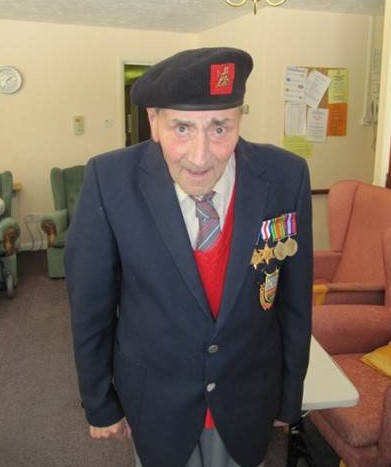
The scheme was originally set up in 2009 by Norfolk Constabulary and the owner of Dorrington House to support war veteran George Herbert. The event took place ahead of World Alzheimer’s Day on 21 September.
It is hoped the relaunch and new video will raise awareness and encourage more care homes, support services and other organisations to utilise the scheme to the benefit of vulnerable people across the country.
The video is available at the bottom of this article or by clicking the below link:
https://www.youtube.com/watch?v=7a0trR5tkEQ
Detective Inspector Brett Harris, who works as part of Suffolk’s Multi Agency Safeguarding Hub and is tactical lead for missing people, said: “Caring for vulnerable people, including those with dementia, Alzheimer's, brain injuries or learning disabilities can be challenging.
“There's a risk that they may get lost, even if taking a walk on a familiar route to a favourite place. Planning ahead to keep them safe is really important and makes such a difference.”
Both constabularies are now exploring the possibly of a digital service to further improve the use and accessibility of the protocol documents and wearable tracking devices through Suffolk County Council.
DI Harris added: “We are extremely proud that the protocol originated so close to Suffolk and that we were able to bring Herbert’s story to life in the animation.
“Working with our partners at Suffolk Safeguarding Partnership and our Norfolk counterparts we created a product that can be used by other agencies and police forces across the country to promote the scheme.
“Herbert’s story is the essence of a community pulling together to look after each another and we hope that the scheme will be used more widely as a result.”
What is the Herbert Protocol?
The Herbert Protocol is a national scheme that encourages carers, family and friends to provide and put together useful information, which can then be used in the event of a vulnerable person going missing. Using the protocol, police resources can targeted to the locations where they have a higher probability of quickly finding the vulnerable person.
Carers and / or relatives and friends can complete a form in advance, including important information about the missing individual. The form can be easily sent or handed to the police in the event of a loved one going missing, reducing the time to gather this information. The form should be completed as soon as possible. The scheme is designed to help those caring for someone with dementia, Alzheimer’s, brain injuries or learning disabilities. It makes sure that in the event a person going missing the police can gain access to essential information promptly.
The Herbert Protocol form contains a list of information to help the police and other support services if the person goes missing, including:
- medication required.
- mobile numbers
- contact details of organisations and business the person visits
- details of places previously located
- a recent photograph
You can find the form by visiting: www.suffolk.police.uk/advice/advice-and-information/missing-person/missing-persons/vulnerable-people-at-risk-of-going-missing/dementia-missing-risk-herbert-protocol/
Further information about care technology and wearable trackers can be found on the Suffolk County Council website:
Keeping a completed form saves the worry of trying to recall the information during the stressful time of someone going missing. It also saves time for the police, allowing the search to start sooner.

Steve Dorrington helped set up the Herbert Protocol and remains the owner of Dorrington House Care Homes.
He said: “George was a very independent chap, he fought for our freedom, and fought us for his too.”
Gary Crowther, who now works as an Operational Trainer within Norfolk Constabulary, developed the scheme with a colleague in 2009 while working as an inspector in the force. As part of his duties, he was a trained missing person police search advisor.
He said: “In 2009, I had no idea that the protocol would be replicated across the country to such an extent.
“I find it heart-warming to see that virtually every police force in the country has adopted it and could not even guess how many lives it has potentially saved.”
Suffolk Police and Crime Commissioner Tim Passmore said: “It is really important that vulnerable people in society are given the care they need to maintain their independence and their dignity. However, we all understand that people with dementia can sometimes wander away, and I can only imagine the distress this could cause the whole family.
“Taking a few minutes to compile information which could be used in the event of a vulnerable person going missing is time well spent. It could help save valuable time in the event of a search, so I would encourage anyone with a friend or family member living with this dreadful disease to think about recording vital details today.
“We all hope the information will never be needed but as they say, best to be prepared and it could be life-saving.”
Anthony Douglas CBE, Independent Chair of the Suffolk Safeguarding Partnership, said: “Knowledgeable dementia care supports people with dementia and their carers who might otherwise easily be misunderstood.
“The Herbert Protocol is a civilising influence and encourages communities to fully accept people with dementia and to make adjustments to the local social fabric to take account of their needs.
“The Protocol enables and liberates people with dementia to live as they wish in safer spaces when the Protocol is followed.”

When to fill in a form
Use your professional opinion as a carer or your knowledge as a family member to decide whether a person is at risk of going missing.
Who completes the form?
It can be sorted by families, loved ones, concerned neighbours, police and home carers all over the UK, helping thousands of people.
In a care setting, the care provider, the person at risk or their family can fill in the form.
Please seek permission from the person at risk or their next of kin. If neither is possible, the care provider should make a 'best interests' assessment.
Update the form regularly to make sure the information is always accurate.
Filling in the form can be a valuable way of communicating with a relative because it causes them to think about where they used to live and work. This triggers memories that they like to talk about and can enrich your visit.
When should the form be given to the police?
The police only need the form at the point the person is reported missing.
There is no need to hand it to police before then and the form will be returned once the person is found.
Where should the form be stored?
It should be stored securely, but where you can find it quickly.
In a care setting, the information must be stored in accordance with data protection legislation. Please make sure other relatives, friends or carers know where it is.
Printed or electronic form?
You can download the form below. A paper copy will need to be handed to the police officer who attends to take the missing person's report.
What if the person goes missing?
If you discover a person is missing, conduct a brief ‘open door’ search of the address, grounds and outbuildings, to see if you can find them.
If they're still missing, call 999 immediately. Don't worry - you won't be criticised for calling the police if you are worried about a person's safety. The sooner the police know someone is missing, the sooner officers can start looking for them.
When you ring the police, tell them you have the Herbert Protocol profile available.
If you have an electronic version of the form, the police will tell you where to email the document so that the information can be shared with the searching officers. If you have a paper copy, have it ready for the attending officer when they arrive.
Be prepared to answer the following questions on the phone:
- where and when the person was last seen
- what they were wearing and carrying
Don't worry, this won't delay the police response - officers will be sent out while you are talking.